
How does it work?

What is EMDR?
What is EMDR?
EMDR (Eye Movement Desensitization and Reprocessing) is a structured therapy that encourages the patient to focus briefly on the trauma memory while simultaneously experiencing bilateral stimulation via eye movements, tapping, or buzzers. It focuses on the three ways that trauma affects people: their thoughts, emotions, and body sensations or body memories. EMDR therapy is an extensively researched, effective psychotherapy method proven to help people recover from trauma and PTSD symptoms, anxiety, depression, OCD, chronic pain, addictions, and other distressing life experiences.
.

Why is EMDR used?
EMDR was originally developed for post-traumatic stress disorder (PTSD), but researchers and clinicians now use it for a wider range of trauma-related issues, including grief, panic, anxiety, depression, and somatic disturbances.
Because trauma often means that certain memories get stored in a “locked” or isolated way—triggering reaction rather than integration—EMDR offers a path toward unlocking and reprocessing these memories in a safe, guided way.
How does EMDR work in a therapy session?
EMDR follows an eight-phase protocol (history/assessment, preparation, assessment of target memory, desensitization, installation of positive belief, body scan, closure, and re-evaluation). The therapist and client identify the traumatic memory or troubled image, associated negative beliefs and body sensations, then apply a bilateral stimulation (BLS) process—such as side-to-side eye movements, tapping, or alternating auditory input—while the client holds the memory in mind. Over time the emotional charge and vividness often diminish.
As the distress decreases, new adaptive beliefs, sensations and responses emerge. The memory remains—but it no longer exerts the same power over the person’s present-time nervous system.
What might a client experience with EMDR?
-
You may feel stronger or lighter when you revisit a troubling memory, because the emotional charge is reduced.
-
You might notice memories surfacing that you hadn’t expected—this can feel unsettling but is part of the integration process.
-
You may experience physical sensations—since trauma is stored in mind and body—and EMDR invites noticing and resourcing those.
-
Progress is often faster than talk therapy alone for some people—but depth and safety matter more than speed.
-
Since EMDR can stir up strong emotions, it’s vital that the therapist is trained, you are resourced (grounding, self-regulation), and your environment is safe.
What's the Theory behind EMDR and is it effective?
Yes—there is strong support for its use in PTSD and trauma-related symptoms. For example, EMDR is listed by some trauma guideline bodies as a first-line treatment for PTSD.
However, effectiveness can vary depending on complexity of trauma, presence of dissociation, current stability, and therapist experience. Some meta-analyses suggest EMDR is equally effective as trauma-focused cognitive behavioral therapies (TF-CBT) but may not offer additional benefits solely because of the eye-movement component
The theoretical model often cited is the Adaptive Information Processing (AIP) model: trauma is seen as having disrupted normal information processing and memory integration, resulting in “stuck” memories that continue to activate distress.
EMDR supports the processing of those memories so that they can be stored adaptively and integrated into the person’s life narrative.
Nothing changes what happened, but EMDR reduces the emotional charge underneath it and gets you out of that stuck hamster wheel of negative thought spiraling.
Is EMDR right for you?
EMDR may be a strong choice if you:
-
Have trauma or distressing memories that “pop up” or feel unresolved.
-
Feel stuck in emotional, physical or relational patterns connected to the past.
-
Want a therapy that works with body sensation, memory, nervous system, and meaning—not just thoughts.
-
Are stable enough for trauma-work (if you are currently unsafe, severely dissociated, or extremely unstable, preparatory work is important).
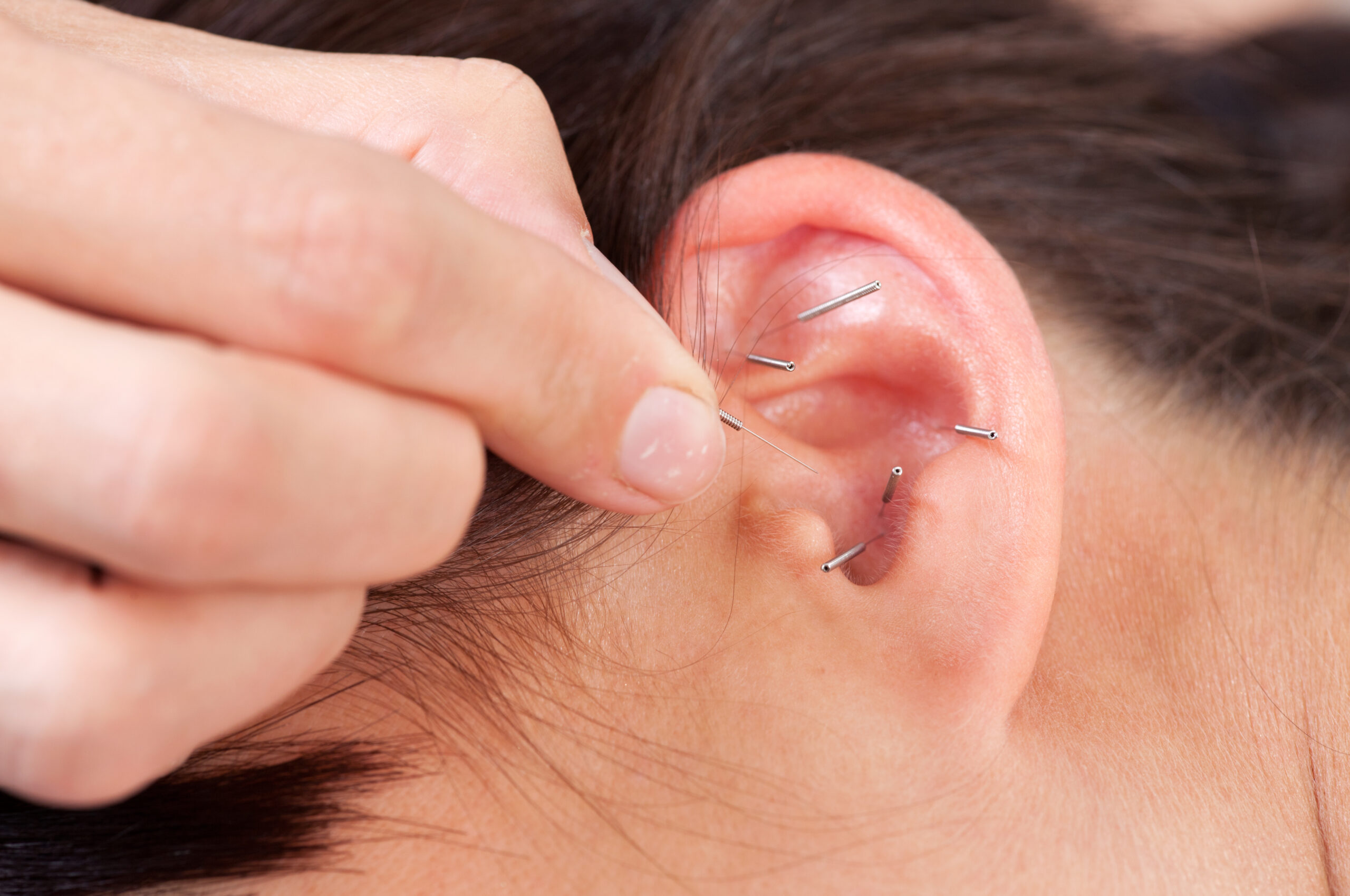
What Does Auriculotherapy help with?
Because every part of the external ear connects through the microsystem remote reflexes to every part of the body, a wide variety of health problems are relieved by auriculotherapy. Almost all health conditions can be affected to some degree by stimulating reactive ear points. The most commonly reported uses of auriculotherapy have been for reducing anxiety, depresssion, the control of chronic pain, detoxification from addictive drugs, relief of nausea, and reduction of hypertension.
What is the history of Auriculotherapy?
The earliest written records of ear acupuncture date back to the Yellow Emperor’s Classic of Internal Medicine, a compilation of acupuncture procedures that were in practice in 500 BC. Within this extensive text that covers a variety of acupuncture treatments, there is mention of specific acupuncture points on the external ear for the relief of certain medical disorders. However, the manner in which auricular acupuncture is practiced today in China is actually based upon more recent discoveries that occurred in France in the 1950’s. The Traditional Oriental Medicine practiced in ancient China included just a scattered array of acupoints on the auricle for just a few health problems, whereas the current practice of auricular acupuncture shows a more complete organization of ear reflex points that can be used to relieve many health problems. In the West, the earliest references to ear treatments were referred to in medical records from ancient Egypt, Greece, and Rome. The most complete descriptions of medical treatments through the ear were recorded in ancient Persia. A trail of evidence of the use of auricular stimulation for the treatment of sciatica back pain can be followed from these Persian records through medieval Europe to modern France. Since the 1950’s, the use of specific ear points as a complete reflex system that can alleviate many health problems has been utilized by clinical practitioners in other parts of Europe, in Asia, and in North and South America.
Who Discovered Auriculotherapy?
While the earliest uses of ear acupuncture points dates back to ancient China, modern applications of auriculotherapy are based on the work of Dr Paul Nogier of Lyon, France. In the 1950’s, Dr. Nogier noticed a strange scar on the upper ear of some of his patients. He found that all of them had been treated for sciatica pain by a local lay practitioner. This woman had cauterized a specific area of the external ear in order to relieve their low back pain. Dr Nogier conducted a similar procedure on his own sciatica patients and found that their back pain was also reduced. He then tried other means of stimulating this “sciatica point,” including the use of acupuncture needles, and found that they too were effective in alleviating sciatica pain. The brilliance of Dr Nogier was in extending this one observation into a more comprehensive model. Dr Nogier theorized that if an area of the upper external ear is effective in treating low back pain, maybe other parts of the ear could treat other parts of the body. The ear is said to represent the whole anatomical body, but in an upside down orientation. Nogier’s theory contended that the auricle could be compared to an inverted fetus, with the head represented on the lower ear lobe, the feet at the top of the external ear, and the rest of the body in-between. This model was first presented to naturopathic practitioners in France in 1957, then spread to acupuncturists in Germany, and finally was translated into Chinese. The Chinese seemed to have adopted the inverted fetus model of ear acupuncture in 1958.
How Long Do the Effects Last?
The range of responses to an auriculotherapy session are quite varied, but it is common that a patient suffering from severe pain will notice mild to marked reduction of their complaint on the very first session. This reduction in their pain experience can actually improve for the next several hours after treatment, but the benefits often begin to subside several days after the first treatment. With each successive treatment, the degree of pain relief usually becomes more and more prominent and the duration of pain relief progressively extends from several days to several weeks.
There is no set number of treatments for any health condition treated by auriculotherapy, but it is common that the severity of most conditions are moderately reduced by four to six sessions and greatly alleviated by eight to twelve sessions.
HOW MANY TIMES PER WEEK ARE TREATMENTS PROVIDED?
The number of treatment sessions per week depends upon the schedule of the patients, as well as the severity of their condition. When possible, severe conditions can be treated on a daily basis, but many patients are not available to come in that often. Typically, patients are given two treatments per week for two to three weeks, then once a week for several more weeks. The frequency of sessions progressively decreases to once a month as the condition symptoms becomes less pronounced
Auriculotherapy & Acudetox
Calming the Nervous System Through the Ears
Auriculotherapy and the AcuDetox 5-Point Protocol both harness the wisdom of the body through gentle stimulation of specific points on the ear—areas connected to the nervous system, emotions, and internal organs. Originally developed and researched by Dr. Jay Holder and later refined through the National Acupuncture Detoxification Association (NADA), these evidence-based approaches have been used worldwide to support recovery from trauma, stress, and addiction.
By engaging the vagus and cranial nerves, auricular therapy helps regulate the body’s “fight-flight-freeze” response, reduce anxiety and cravings, improve sleep, and restore emotional balance. In the AcuDetox protocol, five small needles are placed in each ear (at points corresponding to the liver, lungs, kidneys, sympathetic system, and Shen Men — or “Spirit Gate”) while clients rest quietly.
Both methods offer a gentle, non-verbal pathway for healing—especially for those whose trauma or stress is stored in the body. They are often integrated alongside somatic, EMDR, and talk therapy to create whole-person regulation and recovery.
Learn more through EMDRIA’s research on somatic approaches and the NADA AcuDetox Protocol.
How community ear acupuncture (AcuDetox) started in NYC
In the early 1970s, the South Bronx faced a spiraling heroin crisis and notoriously unsafe hospital conditions. Puerto Rican Young Lords organizers—alongside Black Panther Party allies—occupied Lincoln Hospital to demand dignified care. Locals called it “the Butcher Shop,” and the takeover forced reforms and opened the door to community-run healing projects. HISTORY+1
One of those projects was Lincoln Detox, a clinic inside Lincoln Hospital that offered ear-acupuncture (auriculotherapy) for withdrawal and nervous-system regulation, paired with community education and services. The work was carried forward by figures including Dr. Mutulu Shakur and later psychiatrist Michael O. Smith, who refined the five-point ear protocol that became the NADA/AcuDetox model used around the world. Maryland.gov Enterprise Agency Template+4Wikipedia+4Griffin Acupuncture in Oakland+4
Quick timeline
-
1970: Young Lords and allies occupy Lincoln Hospital in the South Bronx to protest unsafe conditions (“the Butcher Shop”). HISTORY+1
-
1970–1971: Lincoln Detox forms inside the hospital, offering community-based addiction care and acupuncture. Wikipedia
-
1970s: Dr. Mutulu Shakur helps develop and spread ear acupuncture for detox in NYC’s hardest-hit neighborhoods. Griffin Acupuncture in Oakland
-
1980s: Dr. Michael O. Smith formalizes the five-point ear protocol and founds NADA (National Acupuncture Detoxification Association).
Trauma Informed Yoga and Somatic Therapy
Trauma-informed yoga (TIY) and somatic therapy are mind-body approaches that recognise how trauma is not just stored in memory —but also embedded in the nervous system and the body’s muscle-memory, posture, and movement. When we’ve experienced overwhelming events, it’s common that our body keeps watching, waiting, or preparing for threat even when the danger has passed. TIY and somatic therapy help to turn that system back toward regulation, safety, and choice.
In trauma-informed yoga, the teacher/therapist creates a safe space (with cues for choice, gentle language, no forced poses) so that you can begin to reconnect with your body and nervous system rather than being hijacked by it. Somatic therapy uses gentle movement, breath awareness, body scanning, interoception (noticing internal sensations) and proprioception (noticing how your body moves in space) to access what trauma has lodged in the body.
For example, a study of somatic-oriented therapy found preliminary evidence that it may be effective in treating PTSD by changing interoceptive and proprioceptive sensations. Likewise, trauma-sensitive yoga research shows increases in self-efficacy, compassion, relatedness, and centredness for adult women survivors of chronic childhood abuse.

Why do this stuff?
Trauma is often experienced as disconnection: disconnection from body, from safety, from control and from self.
Traditional talk therapy is incredibly powerful—but for many people the body continues to remember what the mind tries to forget. In fact, traditional talk therapy can acutally make the trauma effects even worse.
TIY and somatic therapies address the bottom-up layer of healing: nervous system regulation, felt sense of safety, embodiment, and then meaning. For example, a randomized trial found that yoga significantly reduced PTSD symptomology and affected emotional and sensory regulation. PubMed+1
Another review found yoga and meditation interventions produced meaningful reduction in PTSD symptoms across adult populations.
What Does a session look like?
n a trauma-informed yoga or somatic therapy session, you might expect:
-
A calm, inviting environment with minimal trigger-risk (no flashy lights, no shouting, no forced partner work).
-
Clear options and choice (“You may rest here; you may move when you feel ready”).
-
Gentle movement (yoga postures adapted, somatic body-scanning, breath work) with invitation to notice what arises in the body. (this is not a traditional yoga flow class, so no need for strecthy pants)
-
Brief reflection or processing: noticing sensations, emotions, thoughts—but emphasis remains on the body’s capacity to regulate, and the client’s choice to move or rest.
-
A grounding / closure phase: stabilising the nervous system, resources for home-practice, feeling centred before leaving.
In short: the aim is to feel safe enough in your own body. One overview describes trauma-informed yoga as helping people focus on the present moment, making choices, taking effective action, and creating rhythm—all themes that directly counter trauma’s legacy of helplessness, freeze and disconnection.
How does this stuff work and who's it for?
How It Works — Theoretical Framework
Somatic and TIY approaches draw on multiple frameworks:
-
The Adaptive Information Processing (AIP) model (used in EMDR) emphasises that trauma memories are stored in isolated form; body-based work helps integrate them.
-
Polyvagal theory and nervous system regulation show that the body’s state of safety or threat is foundational. TIY helps shift from sympathetic (fight/flight) or dorsal freeze to ventral-vagal regulation (safe-social).
-
Somatic psychology emphasises felt experience (interoception) and the “body’s memory” of trauma—not just what we think or remember.
Who Might Benefit?
This kind of work may be especially valuable if you:
-
Have experienced trauma (PTSD, complex trauma, relational or attachment-based injuries) and feel stuck in body sensations, hyper-arousal, dissociation, or persistent “on-guard” patterns.
-
Feel disconnected from your body or find it hard to “come back home” after stress.
-
Have found talk therapy helpful but still sense something in your body isn’t resolved.
-
Want to build a felt sense of safety, community, and empowerment through movement and embodiment—not just words.
Nerd out more here
-
“Trauma Sensitive Yoga as a complementary treatment for chronic childhood trauma” – full article. PMC
-
“The Science Supporting Yoga Therapy for Trauma Recovery” – overview of evidence. Yoga Therapy Associates
-
“How Trauma-Informed Yoga Helps You Heal” (Cleveland Clinic summary) – accessible write-up. Cleveland Clinic
-
“Somatic Experiencing – effectiveness and key factors” – body-oriented therapy review.
At One Arrow Therapy we integrate trauma-informed yoga and somatic work with clinical therapy so you don’t just talkabout healing—you feel it happening in your body, nervous system, and daily life. You’re supported in choosing your pace, your movements, and your path toward reconnecting with wholeness. Community, empowerment and embodied healing are central. If your body has been guarding you—we invite you to come home.

Why we use it:
Trauma, anxiety, and relational wounds often live in the body as patterns of tension, avoidance, or over-protection. By engaging senses, movement, and creativity, experiential/adventure work supports nervous-system regulation, emotional flexibility, and real-life skill practice (boundaries, trust, problem-solving).
-
Intro/background: Adventure Therapy (summary)
https://en.wikipedia.org/wiki/Adventure_therapy -
Core elements & trauma-informed practice: Association for Experiential Education
https://www.aee.org/core-elements-of-adventure-therapy
How play helps (Lego, art, sand tray, nature)
Play lowers the guard of protective parts and invites curiosity. When your hands are busy—placing a sand figure, stacking Lego, shaping clay, painting a feeling—your system often shifts from “watching for threat” to exploring meaning. That’s where deeper work becomes possible. Research points to:
-
Stress down, regulation up: play is associated with lower cortisol and increases in neurochemistry that supports calm and connection.
https://buildingbetterbrains.com.au/how-play-rewires-the-brain/ -
Better flexibility and reflection: playful, exploratory states engage prefrontal circuits linked to regulation, creativity, and problem-solving.
https://pmc.ncbi.nlm.nih.gov/articles/PMC5646690/ -
Adult play & resilience: playful engagement correlates with emotional intelligence and adaptive coping.
https://pmc.ncbi.nlm.nih.gov/articles/PMC9763996/
In session, that looks like:
-
Lego / model-building: externalize inner dynamics, practice solutions safely.
-
Sand tray worlds: symbolically map relationships, grief, fear, and strength.
-
Painting & sculpting: give shape and color to what words can’t carry.
-
Nature work: mindful hikes, sensory grounding, and metaphor (“What does your forest need?”) to reconnect body and self. (Sometimes we walk and talk a ton on a walking path)
What you can expect
- Safety & choice: opt in/out of any activity; rest is always welcome.
-
Pacing & regulation: gentle arousal windows; frequent grounding.
-
Do → Reflect → Integrate: brief processing ties the activity to your nervous system, relationships, and next steps.
-
Community: authentic, supportive connection (no performance, no perfection).
Who benefits
-
Folks who find talk helpful but still feel stuck “in the body.”
-
Those navigating trauma, anxiety, grief, or relational patterns.
-
Anyone craving empowerment, creativity, and regulation through doing—not just discussing.
Nerd out more here:
-
Experiential therapy explainer (Verywell Mind):
https://www.verywellmind.com/experiential-therapy-definition-techniques-and-efficacy-5198815 -
Adventure therapy overview (Verywell Mind):
https://www.verywellmind.com/adventure-therapy-definition-types-techniques-and-efficacy-5270553 -
Core elements & training (AEE):
https://www.aee.org/core-elements-of-adventure-therapy -
Play, stress, and the brain (review/summary):
https://buildingbetterbrains.com.au/how-play-rewires-the-brain/ -
Neural mechanisms of play (review article):
https://pmc.ncbi.nlm.nih.gov/articles/PMC5646690/ -
Adult playfulness & wellbeing (research):
https://pmc.ncbi.nlm.nih.gov/articles/PMC9763996/
Experiential & Adventure Therapy
What it is
Experiential therapy uses hands-on, creative activities—Lego/model-building, painting and sculpting, sand tray worlds, guided movement, and nature-based experiences—to help you work through emotions and patterns that don’t always surface in talk alone. Adventure therapy brings this into the outdoors (hikes, mindful challenges, team tasks), using metaphor, choice, and community to support change.
-
Overview on experiential therapy: Verywell Mind (what it is, techniques, efficacy)
https://www.verywellmind.com/experiential-therapy-definition-techniques-and-efficacy-5198815 -
Adventure therapy overview: Verywell Mind
https://www.verywellmind.com/adventure-therapy-definition-types-techniques-and-efficacy-5270553